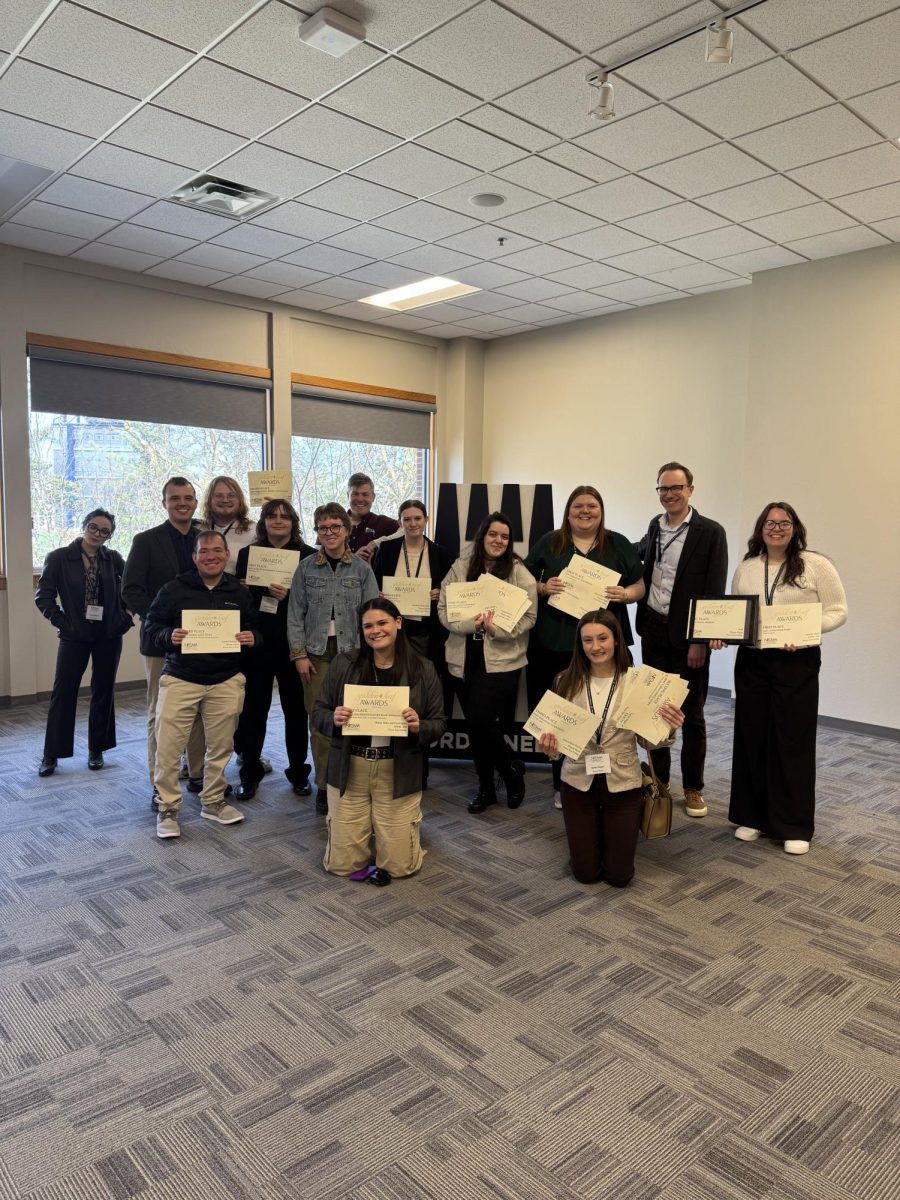
Wayne State College ’s Office of International and Cultural Programs held a cultural runway Tuesday, April 14 to highlight quinceañeras. A quinceañera is a cultural coming of age celebration typically found in the Latin community commemorating a girl’s 15th birthday. Boys who turn 15 can also have a quinceañero, but it’s not typical. This celebration recognizes growth, identity and community support. Sometimes these celebrations can be religious, but they aren’t always.
“If you really want to go the negative way, it was getting you ready for marriage, and traditionally you will wear a white dress,” Elizabeth Heaton, International and Cultural Programs coordinator, said. “It’s basically saying you’re ready for marriage, and you’re saying goodbye to your childhood, and you’re becoming a woman – but in today’s world it’s very different.”
In the modern age, a quinceañera focuses on celebrating growth and the coming of age. Quinceañeras also have been big on community support. Heaton said there are godfathers or godmothers for everything. The godparents, who do not have to be relatives, would take care of things like the main present or drinks.
When having a quinceañera, there will be something called a court of honor, which varies in size. For example, Heaton had a smaller court unlike her sister, who had an eight-person court. The court can be men and women. Traditionally, the court represents the age of the girl prior to her 15th birthday.
Dresses for quinceañeras are a symbol of transition, representing a new stage of life. These dresses are typically elaborate and sometimes poofy. This tradition has evolved into reflecting personal style, cultural fusion, and accessibility.
Sherlyn Medina, a student at WSC, had her dress made in Mexico. Heaton got her dress hand-made in Fremont. Traditionally, dresses were hand-made. Now, there are stores for quinceañeras.
“They’re expensive,” Heaton said. “I really wish that if I do have a child and my child wants to wear my dress… that’s fine. I’m hoping they do just to pass down that dress.”
Another tradition is the “first pair” of heels. The change from flat shoes to heels represents leaving childhood behind and stepping leaving childhood into a new phase.
Another tradition involves receiving a ring from loved ones as a reminder of support, symbolizing ongoing guidance, responsibility and connection to family.
Dolls are a traditional piece also. This represents the transition away from childhood. Now, this tradition might be replaced with other symbolic meaningful objects or omitted altogether.
The event was catered and a student who owns a bakery provided cake. Students were encouraged to wear their dresses. They decided to display them instead since the dresses were heavy.